Flowers
Price C$4.50
Digital gifts · Prices follow your selected currency
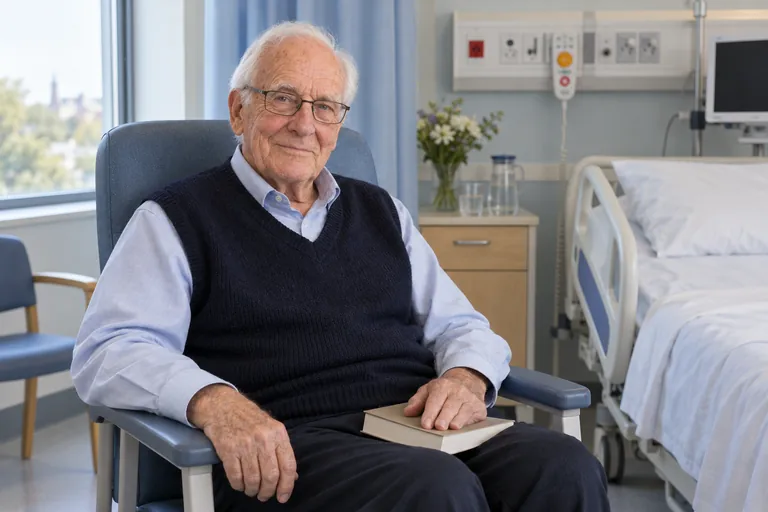
Forty years behind a Portsmouth bus wheel left John with a map of the city and a finely tuned sense of the ridiculous.
 AI chat available
AI-created fictional artwork. PatientVille characters and hospital scenes are invented. No real patients are portrayed.
About our characters →Make yourself comfortable. Start a conversation in your own words.
By continuing, you agree to send your messages to OpenAI. Please keep personal and medical details out of the chat.
Your messages and a short conversation history are sent to OpenAI to generate and check replies. The conversation stays in this tab and is cleared on refresh. OpenAI may retain API data for abuse monitoring. A necessary cookie and temporary usage counters prevent misuse.
No real person, medical advice or emergency support. You can leave at any time.
PrivacyFor John
Checking payment availability
Price C$4.50
Price C$7.50
For John
Choose your card design, message and one-time price. This is a digital decoration, not a donation.
Choose C$2.00 to C$200.00. This is the full one-time price of your digital card.
A digital gift for John’s fictional room. Payment goes to PatientVille, not to a real patient. No cash value or physical delivery.
Price C$2.50
Price C$3.50
Price C$5.00
Price C$2.00
Virtual gifts only · No real delivery
Pay securely by card, Apple Pay or Google Pay.
Available wallets appear in checkout on supported devices.
Digital decorations for this room. Your purchased gifts return when you revisit in this browser.
Checking payment availability…
Available wallets appear in Stripe checkout on supported devices. Stripe asks for an address for tax and wallet eligibility. Nothing is shipped. Conversations stay free.
An old route map is spread across John’s hospital bedside table. He taps a stop near the harbour. A passenger once boarded there carrying a fern so large that John could see only a pair of shoes beneath it. The fern travelled three stops and obeyed every instruction. Its owner argued about the fare. John recalls explaining that plants travelled free, provided they did not occupy a seat. The man laughed, the queue moved, and for weeks the regulars asked whether the fern had renewed its season ticket.
John’s favourite stretch of road was not scenic. It ran between warehouses, then offered a square of sea for about two seconds. He never slowed the bus to admire it; the timetable had opinions about that. But on early shifts the patch of water changed from grey to silver. A young colleague once asked which part of the route mattered most. John pointed out a difficult junction, then mentioned the gap between the buildings. Knowing where to look, he said, helped a long morning along.
John has drawn his old route in pencil. The hospital visitor chair holds the map while he searches for an eraser. A warehouse has gone; a café has changed its name. He leaves both old and new names on the page. A map should admit when things move, he decides. At the harbour stop he adds a tiny fern. Nobody else would know why it belonged there. That is all right. The practical directions are clear, and the unnecessary details are what make it his map.